
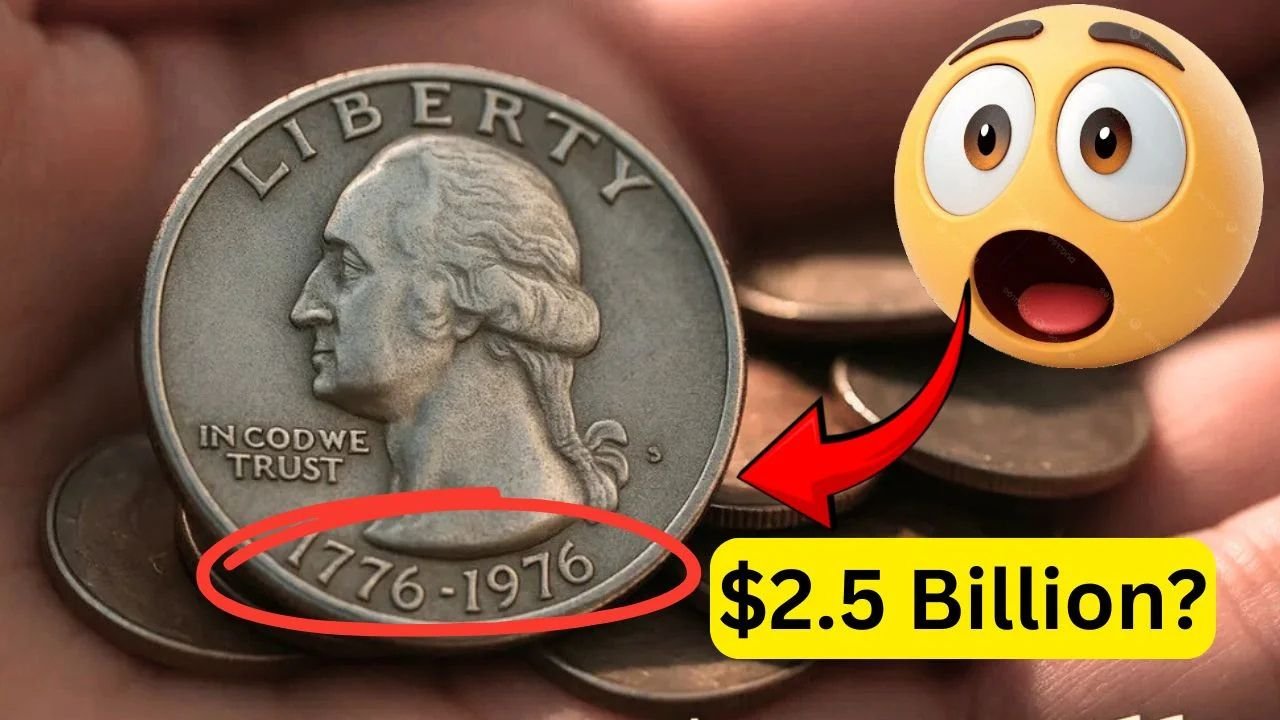
Have you ever checked your loose change for hidden treasures? Among the coins jingling in your pocket, one might be worth a fortune: the rare 1976 Bicentennial Quarter. This special coin, created to celebrate America’s 200th birthday, could be valued at up to $2.5 billion if you find the right one. Let’s explore what makes this quarter so valuable, how to spot it, and why it’s a collector’s dream.
What Is the Bicentennial Quarter?
The Bicentennial Quarter was minted in 1975 and 1976 to mark the United States’ 200th anniversary of independence. Unlike regular quarters, it has a unique design. The front features the usual portrait of George Washington, but the back shows a colonial drummer and a torch surrounded by 13 stars, symbolizing the original 13 colonies. Most of these quarters are worth only 25 cents, but a rare version could make you rich.
Why Is It So Valuable?

Certain Bicentennial Quarters are extremely rare due to minting errors or unique features. For example, some were struck on special metal blanks, like silver or experimental alloys, by mistake. Others have double-stamped designs or missing mint marks, making them one-of-a-kind. Collectors pay huge sums for these rare coins because they’re so hard to find.
How to Identify a Rare Bicentennial Quarter
To find a valuable Bicentennial Quarter, you need to know what to look for. Here are the key features that could indicate a rare coin:
1. Check the Date and Mint Mark
- Date: Look for “1776-1976” on the back. Some rare quarters were minted in 1975, so check both years.
- Mint Mark: This is a small letter on the coin showing where it was made. Look just below Washington’s neck on the front:
- D (Denver) or P (Philadelphia): Common, but some errors are valuable.
- S (San Francisco): These are often silver and more valuable, especially in proof sets.
- No mint mark: This could indicate a rare error coin.
2. Look for Minting Errors
Some quarters have mistakes that make them unique:
- Double Die: The design appears doubled, especially in the text or drummer image.
- Wrong Metal: Some quarters were accidentally struck on silver or copper-nickel blanks meant for other coins.
- Missing Letters or Numbers: Errors in the text can increase value.
3. Check the Material
Most Bicentennial Quarters are made of copper-nickel, but some rare ones are 40% silver. To test, use a magnet: silver coins won’t stick, while copper-nickel ones might.
4. Examine the Condition
Coins in excellent condition (called “mint” or “uncirculated”) are worth more. Avoid cleaning your coin, as it can lower its value.
Where to Find These Quarters
You don’t need to dig through a pirate’s treasure chest to find a Bicentennial Quarter. Here are some places to start:
- Pocket Change: Check coins in your wallet, piggy bank, or cash register.
- Coin Rolls: Banks sell rolls of quarters that might contain rare ones.
- Flea Markets or Garage Sales: Old coin collections sometimes hide treasures.
- Family Heirlooms: Ask relatives if they have old coins stashed away.
How Much Is It Worth?

The value of a rare Bicentennial Quarter depends on its condition and rarity. Regular quarters are worth 25 cents, but rare ones can fetch thousands or even millions. For example:
- A 1976-S silver proof quarter in perfect condition might sell for $10–$50.
- A quarter with a double-die error could be worth $500–$1,000.
- Ultra-rare versions, like those struck on experimental metals, have sold for millions at auctions.
To get an accurate value, have your coin appraised by a professional coin dealer or grading service like PCGS or NGC.
Common vs. Rare Bicentennial Quarters
| Feature | Common Quarter | Rare Quarter |
|---|---|---|
| Material | Copper-nickel | 40% silver or experimental alloy |
| Mint Mark | P or D | S or no mint mark (error) |
| Design Errors | None | Double die, missing letters |
| Value | 25 cents | $10 to millions |
| Where to Find | Everyday change | Old collections, coin rolls |
Tips for Coin Hunters
- Use a Magnifying Glass: Small details like double stamping are hard to see with the naked eye.
- Learn Coin Grading: Understand terms like “mint state” or “proof” to assess value.
- Join Coin Communities: Online forums or local coin clubs can offer tips and help identify rare finds.
- Store Coins Safely: Keep potential treasures in protective sleeves to preserve their condition.
Glossary of Coin Terms
| Difficult Term | Simple Explanation |
|---|---|
| Mint Mark | A letter showing where the coin was made |
| Double Die | A mistake where the design is stamped twice |
| Proof Coin | A high-quality coin made for collectors |
| Uncirculated | A coin that hasn’t been used in transactions |
| Alloy | A mix of metals used to make the coin |
Conclusion
The Bicentennial Quarter is more than just pocket change—it could be a ticket to millions. By learning to spot rare features like minting errors, silver content, or unique mint marks, you can turn a simple coin hunt into a life-changing discovery. Start checking your change, coin rolls, or family collections today. With a bit of luck and a keen eye, you might find a treasure worth up to $2.5 billion. Happy hunting!