
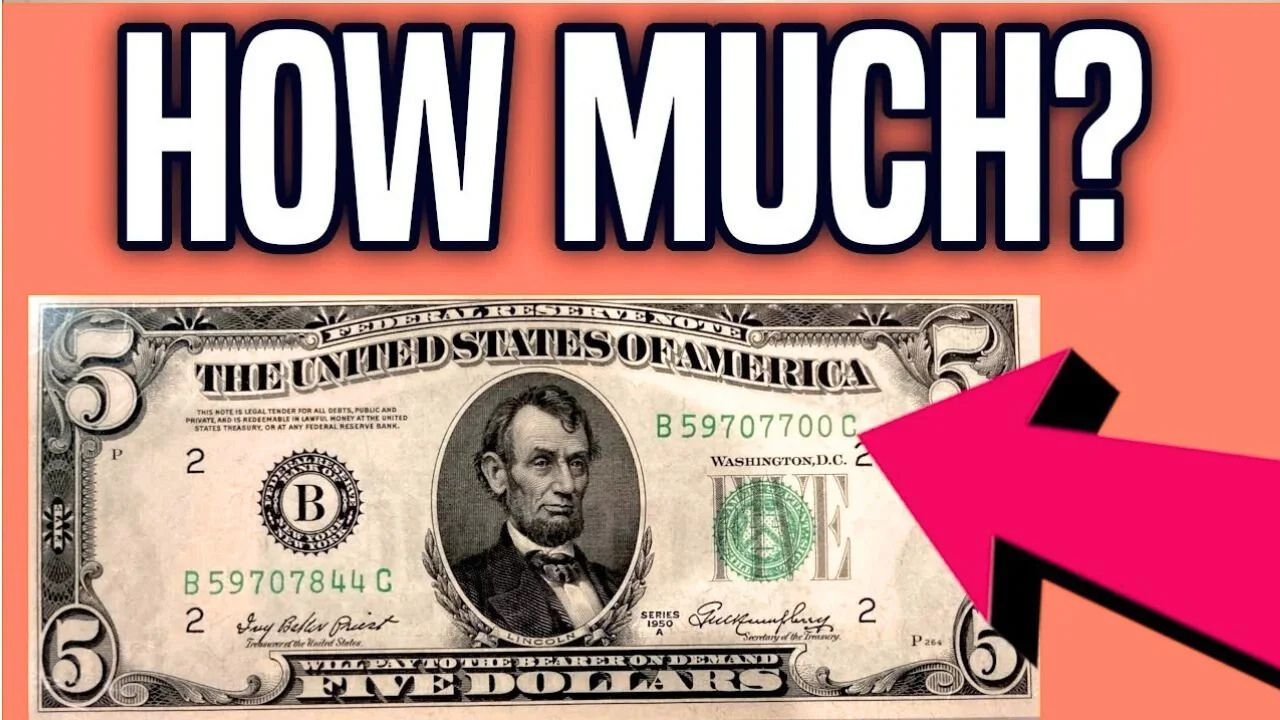
Have you ever checked your wallet and wondered if you’re holding a rare piece of currency? Some $5 bills from 1995 have a unique feature—an upside-down Treasury seal—that makes them valuable to collectors. This article explains how to identify these special bills in simple terms, why they’re unique, and what to look for. Whether you’re a collector or just curious, this guide will help you spot a 1995 $5 bill with an upside-down seal.
What Makes the 1995 $5 Bill Special?
In 1995, a small number of $5 bills were printed with an error: the Treasury seal was accidentally printed upside down. This mistake happened during the production of U.S. currency, making these bills rare and sought after by collectors. The upside-down seal doesn’t affect the bill’s legal use, but it increases its value in the collector’s market.
Why Do Printing Errors Happen?

Printing errors, like the upside-down seal, occur due to mistakes in the production process at the U.S. Bureau of Engraving and Printing. These errors are rare because of strict quality checks, but when they slip through, they create unique items that collectors prize.
How to Identify a 1995 $5 Bill with an Upside-Down Seal
To find out if you have one of these rare bills, follow these simple steps:
Step 1: Check the Year
Look at the front of the $5 bill. The year printed on it should be 1995. This is the first clue that you might have a special bill.
Step 2: Find the Treasury Seal
The Treasury seal is a green circular design on the right side of the bill’s front. It usually includes the words “Department of the Treasury” and a shield with scales.
Step 3: Look for the Upside-Down Seal
Hold the bill so that Abraham Lincoln’s portrait is facing you correctly. If the Treasury seal is upside down (the text and design are rotated 180 degrees), you’ve likely found one of the rare error bills.
Step 4: Verify Other Details
To ensure authenticity:
- Series Date: Confirm the series date is “1995” (found near the portrait).
- Serial Numbers: Check the green serial numbers on the front. They should match and be evenly spaced.
- Paper Quality: The bill should feel like standard U.S. currency paper, with a slightly textured surface.
Step 5: Check the Condition

The value of the bill depends on its condition. Bills in crisp, uncirculated condition (no folds, tears, or wear) are worth more to collectors than worn ones.
Why Are These Bills Valuable?
The upside-down seal makes the 1995 $5 bill a collectible item because of its rarity. Collectors love unique errors, and the value can range from a few hundred to thousands of dollars, depending on the bill’s condition and market demand. For example, a bill in excellent condition might fetch a higher price at auctions or specialty currency shops.
Key Features of the 1995 $5 Bill with an Upside-Down Seal
| Feature | Description |
|---|---|
| Year | Printed as “1995” on the front of the bill. |
| Treasury Seal | Green, circular seal on the right side, upside down when Lincoln faces up. |
| Serial Numbers | Green, matching numbers on the front, evenly spaced. |
| Condition | Crisp, uncirculated bills are more valuable than worn ones. |
| Error Type | Upside-down Treasury seal, a rare printing mistake. |
How to Confirm It’s Real
If you think you’ve found a 1995 $5 bill with an upside-down seal, you may want to verify its authenticity:
- Consult an Expert: Take the bill to a professional currency dealer or appraiser.
- Compare Online: Look up images of authentic 1995 $5 bills with the error on trusted numismatic websites.
- Check for Counterfeits: Ensure the bill has security features like the correct paper texture and microprinting.
What to Do If You Find One
If you confirm you have a rare 1995 $5 bill with an upside-down seal:
- Store It Safely: Keep the bill in a protective sleeve to preserve its condition.
- Get It Appraised: Contact a currency expert to determine its value.
- Sell or Keep: Decide whether to sell it at an auction, to a dealer, or keep it as part of your collection.
Where to Sell
- Online Marketplaces: Websites like eBay or Heritage Auctions often list rare currency.
- Currency Dealers: Local or online dealers specializing in collectible money.
- Coin Shows: Attend numismatic events to meet collectors and dealers.
Common Terms Made Simple
Here’s a table explaining some tricky terms in easy words:
| Difficult Term | Simple Explanation |
|---|---|
| Numismatic | Related to collecting coins, bills, or other currency. |
| Uncirculated | A bill that’s never been used, looks brand new. |
| Treasury Seal | The green design on the bill showing it’s official U.S. money. |
| Printing Error | A mistake made when the bill was made, like an upside-down seal. |
Conclusion
The 1995 $5 bill with an upside-down Treasury seal is a rare find that can be worth much more than its face value. By checking the year, inspecting the seal, and verifying the bill’s condition, you can determine if you’re holding a valuable collector’s item. Whether you’re a seasoned collector or just someone curious about the cash in your wallet, knowing how to spot this error can be exciting and potentially rewarding. Next time you have a $5 bill, take a closer look—you might be holding a piece of numismatic history!