
What if the crumpled $5 bill in your pocket could be worth thousands? One printing error from 1995 has turned an ordinary note into a collector’s dream — and it might be hiding in plain sight.
What Is the 1995 $5 Bill with Inverted Seal?
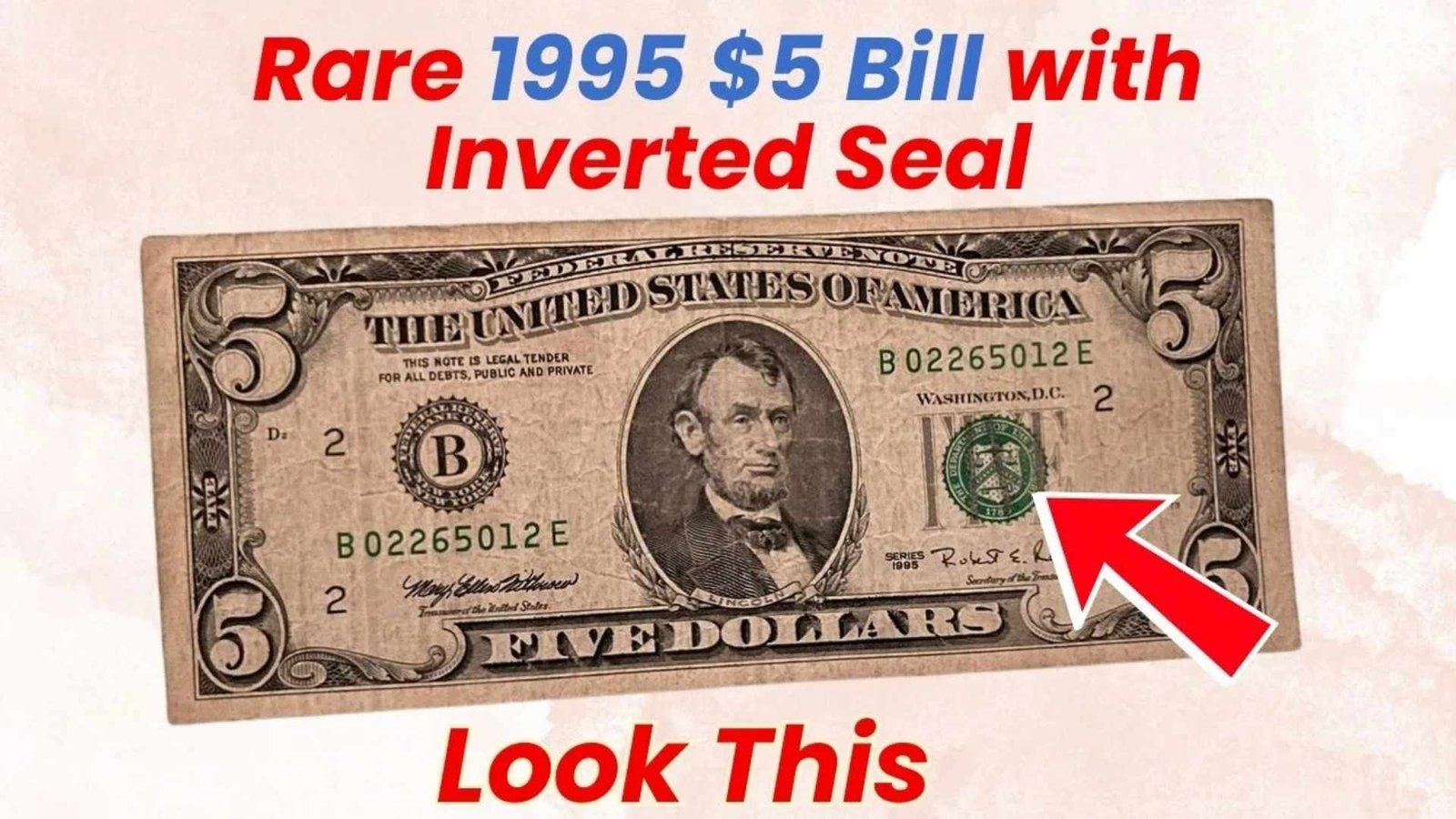
In 1995, the U.S. Bureau of Engraving and Printing accidentally released a small batch of $5 Federal Reserve Notes with the Treasury seal printed upside down. This subtle flaw is called an inverted seal error, and it transforms a common bill into a rare collectible.
The Origins of This Rare Error
Printing U.S. currency involves multiple stages. During one of these steps in 1995, a misalignment caused the green Treasury seal to be rotated 180 degrees. Instead of being destroyed, some of these error notes were mistakenly released into circulation — starting a quiet treasure hunt that continues today.
Why It’s So Valuable in 2025
Collectors are obsessed with rare printing errors because they combine history, scarcity, and visual intrigue. A standard 1995 $5 bill is worth exactly five dollars, but with an inverted seal, values can skyrocket. Bills in pristine condition have sold for $500–$3,000 at auctions.
Value Comparison
| Condition | Estimated Value | Notes |
|---|---|---|
| Circulated | $250–$800 | Value depends on wear |
| Crisp Uncirculated | $1,200–$3,000 | Highest demand |
| Star Note + Error | $2,500+ | Extremely rare combo |
How to Check If You Have One
Finding an inverted seal is easier than you think.
- Hold your bill upright.
- Look at the green Treasury seal on the right.
- If it’s upside down compared to the portrait of Abraham Lincoln — congratulations, you may have struck gold.
Famous Finds and Record Sales

Some lucky people have discovered these bills in old wallets, inherited collections, or even in bank withdrawals. A high-grade example recently sold for $2,750 at a Heritage Auctions event, proving demand is alive and well.
Quick Facts
| Fact | Detail |
|---|---|
| Year Issued | 1995 |
| Denomination | $5 |
| Error Type | Inverted Treasury Seal |
| Collector Demand | High |
| Known Examples | Fewer than 500 estimated |
Tips from Currency Experts
1. Protect Condition – Store bills in acid-free sleeves.
2. Authenticate – Get it graded by PMG or PCGS for maximum value.
3. Don’t Clean – Cleaning reduces collector value drastically.
4. Sell Smart – Auctions often yield higher prices than private sales.
FAQs
Q: Can banks exchange this for face value?
Yes, but that would be a huge loss — sell to collectors instead.

Q: Is it legal to own?
Absolutely, currency errors are legal to collect and trade.
Q: Can modern bills have inverted seals?
Rarely, but strict quality checks make it far less common today.
Conclusion
The 1995 $5 bill with an inverted seal is a rare piece of U.S. currency history hiding in plain sight. It’s a perfect example of how small mistakes can lead to big rewards. Next time you get change, check your bills — your next coffee purchase might just come with a collector’s jackpot.