
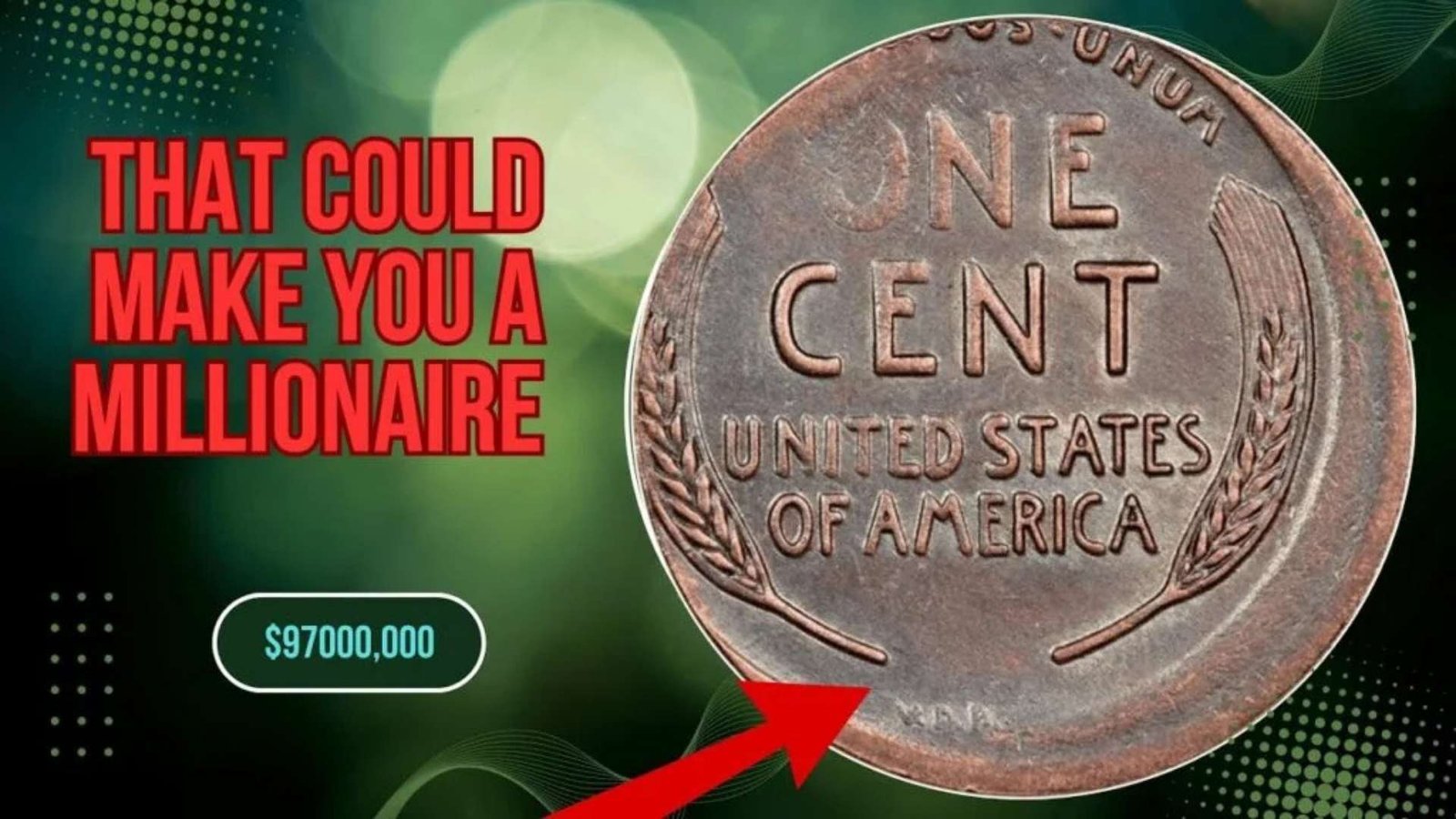
What if the coin rattling at the bottom of your change jar was worth more than your house? The Lincoln Wheat Penny, a humble piece of copper, has shocked collectors by selling for nearly $5 million. Could you be holding one without knowing it?
What Is the $5 Million Lincoln Wheat Penny?
The Lincoln Wheat Penny, first minted in 1909, looks like an ordinary penny. But certain rare variations and minting errors have made some editions worth millions. One such coin, an unassuming 1943 bronze Lincoln Wheat Penny, stunned the world by fetching a record-breaking $5 million in a private sale.
The History Behind the Lincoln Wheat Penny

The Lincoln cent was introduced in 1909 to honor President Abraham Lincoln’s 100th birthday. Designed by Victor David Brenner, the coin featured Lincoln’s portrait on the obverse and two wheat stalks on the reverse. From 1909 to 1958, these “Wheat Pennies” circulated widely, but due to minting quirks, some became incredibly rare.
Why This Coin Is Worth Millions
Not all Wheat Pennies are valuable, but certain editions are legendary. The 1943 bronze penny is the star, created by mistake when bronze planchets were left in the presses while the U.S. Mint switched to steel for wartime needs. Because of its rarity, collectors are willing to pay astronomical amounts.
| Year / Type | Reason for Value | Estimated Worth |
|---|---|---|
| 1909-S VDB | Limited mintage, designer initials | $1,000 – $3,000 |
| 1914-D | Scarce Denver issue | $500 – $3,500 |
| 1922 No D | Mint error, no Denver mark | $1,500 – $15,000 |
| 1943 Bronze | Wartime mint error, extremely rare | $250,000 – $5,000,000 |
| 1955 Double Die | Striking error, doubled letters | $1,000 – $15,000 |
How to Tell If You Have a $5 Million Penny
Spotting one isn’t impossible. Follow these quick checks:
- Look for 1943 bronze (copper-colored, not steel)
- Use a magnet — steel sticks, bronze doesn’t
- Check weight: bronze = 3.1g, steel = 2.7g
- Inspect for double die errors or missing mint marks

If you think you have one, get it authenticated by a professional coin grading service before selling.
Why Collectors Pay Millions
Rare coins are more than money; they’re pieces of history. Owning a Lincoln Wheat Penny error coin is like holding a time capsule from America’s past. Collectors and investors pay premiums not only for rarity but also for condition, provenance, and historical significance.
| Factor | Impact on Value |
|---|---|
| Rarity | Few known examples drive price |
| Condition (Grade) | Mint State coins fetch millions |
| Historical Importance | WWII-era errors add intrigue |
| Collector Demand | Bidding wars boost final price |
Fascinating Facts About the Wheat Penny
The U.S. Mint struck over 24 billion Wheat Pennies between 1909–1958. Only a handful of 1943 bronze pennies are confirmed. One was found in a high school cafeteria in the 1940s. The finest-known specimen sold for $1.7 million in 2010 and later for $5 million in 2019.
Expert Tips for Coin Hunters

Always check pocket change before spending it. Use a magnifying glass to spot mint marks and doubling. Store coins in protective holders to preserve condition. Get suspicious pennies professionally graded before selling. Join collector groups to stay updated on auction sales and discoveries.
FAQs
Q: What makes the 1943 penny so valuable?
It was mistakenly struck in bronze instead of steel during WWII, making it incredibly rare.
Q: Can I find a $5 million penny in circulation today?
It’s rare, but yes — some have been discovered in change jars and coin rolls.
Q: How can I sell a rare penny?
Through professional auction houses, coin dealers, or private collectors after certification.
Q: Are all Wheat Pennies valuable?
No. Most are common, but specific years, mint errors, and conditions can be worth thousands.
Conclusion
The $5 million Lincoln Wheat Penny proves that even ordinary pocket change can hide extraordinary treasures. While most pennies are just one cent, the right one could change your life forever. Next time you come across a Lincoln Wheat Cent, don’t ignore it — you might just be holding history worth millions.